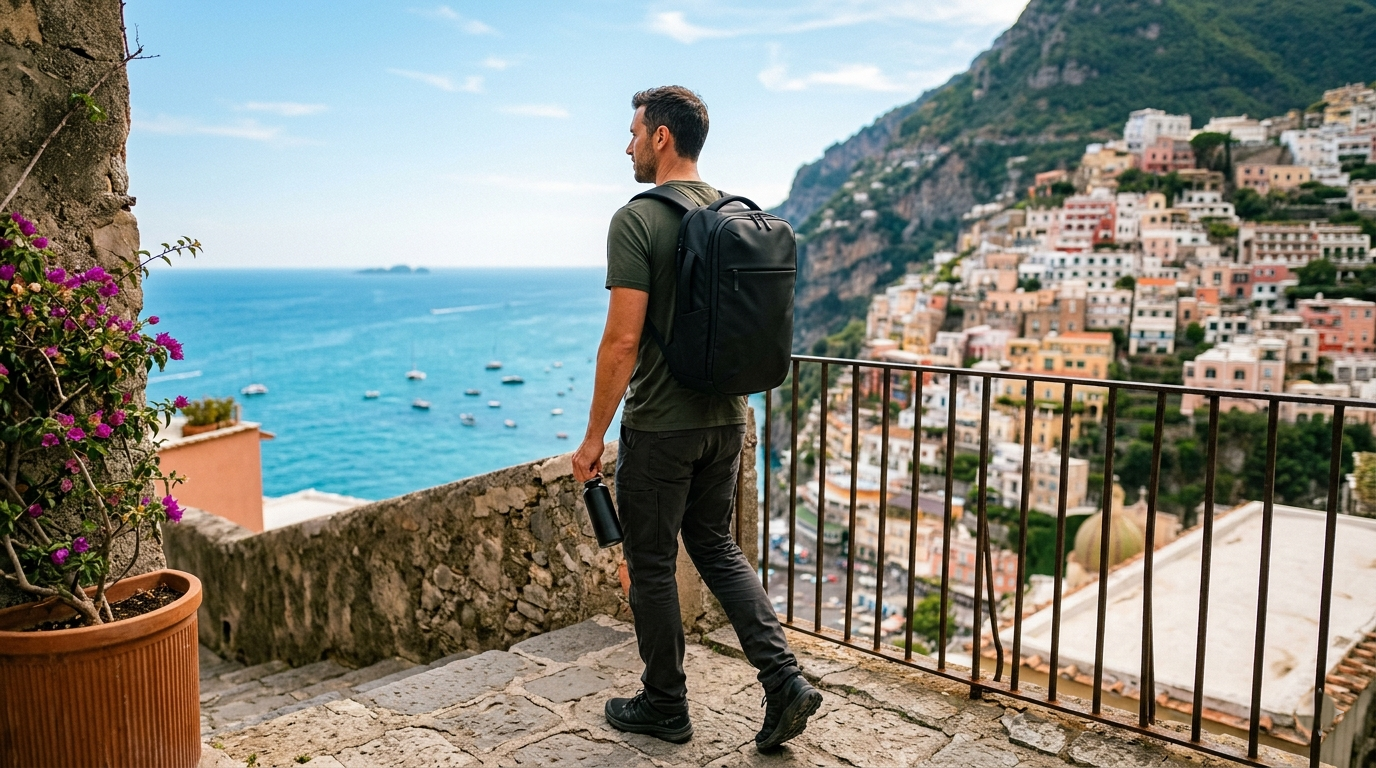
Minimalist Digital Nomad Kit: One Backpack, Zero Excuses
Picture this: it’s 6 a.m. in Lisbon. You fold your laptop shut, zip up your bag, and catch a train to Porto no checked luggage fees, no frantic repacking, no back pain. Just you and everything you actually need.
That’s the promise of a minimalist digital nomad kit. And it’s not some Pinterest fantasy. Thousands of remote workers, freelancers, and location-independent entrepreneurs are pulling it off every single day.
But here’s where most people get it wrong: they confuse “minimalist” with “unprepared.” Strip too much, and you’re fumbling with slow Wi-Fi and a dead laptop in a Barcelona café. Pack too much, and you’re the person dragging a 30-pound rolling bag up cobblestone streets at midnight.
This guide cuts right to the middle everything you genuinely need, nothing you don’t.
Why the One-Backpack Philosophy Works
There’s a reason the one-bag movement has exploded among remote workers. It’s not just about aesthetics or Instagram-worthy travel photos. It’s deeply practical.
When you’re working from Bali on Monday and Medellín by Thursday, every extra pound is a tax on your freedom. Carry-on only means no checked luggage fees, no waiting at baggage carousels, and no lost bags which is a real and devastating risk when your laptop and client deliverables are inside.
More importantly, a single well-organized backpack forces clarity. You can only carry what earns its place. That mindset, weirdly enough, tends to bleed into your work too.
The Right Backpack: Foundation of Everything
Before you stuff it with gear, pick the right vessel. The bag itself matters more than people think.
Look for something in the 20–35 liter range. Smaller and you’ll sacrifice too much. Larger and you’ll fill it with things you don’t need humans are remarkably good at expanding to available space.
Top picks that digital nomads actually swear by:
- Osprey Farpoint 40 — versatile, comfortable, passes most airline carry-on size limits
- Nomatic Travel Bag — built specifically for digital workers, with a dedicated laptop sleeve and thoughtful compartments
- Tortuga Setout 45L — if you’re pushing the volume limit and need maximum organization
Whatever you choose, it should have a padded laptop sleeve, access to all compartments without fully unpacking, and comfortable straps if you’re walking more than a few blocks at a time.
The Core Tech Stack: Your Digital Office in 10 Pounds or Less
This is the heart of your minimalist digital nomad kit — the gear that actually runs your business.
Laptop: Non-Negotiable, Choose Wisely
You’re not carrying two devices. One laptop, full stop. The MacBook Air M-series (M3 or M4) remains the gold standard for nomads exceptional battery life, lightweight, powerful enough for design, video, and code. If you’re Windows-first, the Dell XPS 13 or LG Gram 14 are serious contenders.
Weight matters. A 1.4 kg laptop versus a 2.2 kg laptop sounds trivial until day three of walking between co-working spaces.
Accessories That Pull Their Weight
Every item on this list earns its place through daily use:
- Portable charger (20,000 mAh): The Anker 737 or similar keeps your laptop and phone alive through long travel days and unreliable power situations.
- Universal travel adapter: One compact unit. Get one with USB-A and USB-C ports built in.
- USB-C hub (4-in-1 or 6-in-1): Most modern laptops have stripped down ports. A small hub — HDMI, USB-A, SD card, extra USB-C — handles almost every situation.
- Wireless mouse: Optional, but if you do client calls, design work, or extended writing sessions, your productivity doubles. The Logitech MX Anywhere 3 folds flat and is barely noticeable in a bag.
- Noise-cancelling earbuds or headphones: Non-negotiable for calls and focus in noisy environments. Sony WF-1000XM5 earbuds are compact and exceptional. If you need over-ear, the Bose QuietComfort 45 folds flat.
- Laptop stand: A folding aluminum stand like the Nexstand K2 weighs almost nothing and saves your neck and spine during long work sessions.
- Portable keyboard (optional): If you use a stand, a slim Bluetooth keyboard completes the ergonomic setup. The Keychron K3 is popular for good reason.
Connectivity: Because “The Wi-Fi Is Down” Can’t Be an Excuse
Bad internet has killed more deadlines than bad planning ever has.
Local SIM cards are your first line of defense. In most countries, picking up a local data SIM at the airport takes ten minutes and costs almost nothing. Apps like Airalo make this even easier you buy an eSIM before you land and activate it on arrival.
A travel router like the GL.iNet Mango is a quiet game-changer. It converts any hotel ethernet port or sketchy shared Wi-Fi into a private, more stable connection. It fits in the palm of your hand.
For critical client calls or deadline days, know your backup options in every city nearby co-working spaces, cafés with fiber internet, or local SIM hotspot speeds before you need them.
Work Essentials Beyond Tech
The non-tech items in a minimalist digital nomad kit are just as deliberate.
Documents and Financial Tools
- Passport (obviously), plus digital copies stored in the cloud and a printed set kept separately
- An international debit card with zero foreign transaction fees — Wise and Charles Schwab are nomad favorites
- A credit card with solid travel rewards and no foreign fees
- A slim RFID-blocking card holder instead of a bulky wallet
Health and Focus Kit
Long-haul nomadic work takes a physical toll that people underestimate.
Pack a small pouch with: blue light glasses (optional but useful for late sessions), a compact first aid kit, any prescription medications with at least a 30-day buffer, and melatonin or a sleep mask for crossing time zones.
Don’t overlook a microfiber travel towel many accommodation types don’t provide them, and it doubles as a light blanket on cold overnight trains.
What to Leave Behind (Seriously)
The minimalist digital nomad kit is defined as much by what’s absent as what’s included.
Leave these at home:
- A tablet and a laptop (pick one)
- Multiple pairs of shoes beyond 2–3 versatile options
- Specialty cables and adapters beyond your hub
- Books (a Kindle or phone app holds thousands)
- Any gadget you haven’t used in the past two weeks
The test is simple: if you’d have to think hard to justify why it’s there, it probably isn’t.
Packing It All Together: The Final Checklist
Here’s your consolidated minimalist digital nomad kit at a glance:
Tech:
- Laptop (your primary work machine)
- USB-C hub
- Universal travel adapter
- Portable charger
- Earbuds or headphones
- Laptop stand
- Wireless mouse (optional)
Connectivity:
- Local SIM or Airalo eSIM plan
- Travel router
Documents & Finance:
- Passport + backup copies
- Zero-fee international debit and credit cards
- Slim card holder
Health & Comfort:
- First aid essentials
- Sleep mask or melatonin
- Microfiber towel
Clothing: This varies by personal style, but most one-baggers settle on 5–7 tops, 2–3 bottoms, and layers for temperature changes all in neutral, mix-and-match colors that don’t wrinkle badly.
Conclusion: The Backpack Is Just the Beginning
There’s something that shifts when you zip up a single bag and realize everything you need for work and life is right there. It’s not about deprivation. It’s about deciding what actually matters.
The minimalist digital nomad kit isn’t a rigid gear list it’s a philosophy. You’ll adapt it, swap things out, discover that you never actually use the travel router in cities with great café Wi-Fi, or that you desperately wish you’d brought better ear protection.
That iteration is the point. Start lean, adjust as you go, and build the kit that fits your work and travel style.
Ready to start? Pick one item from this list you don’t currently have, and get it before your next trip. Small steps, one backpack, unlimited destinations.
Frequently Asked Questions
What is the best backpack size for a minimalist digital nomad? Most experienced digital nomads recommend 20–35 liters for true one-bag travel. This range fits most airline carry-on requirements while giving you enough room for tech gear, a week’s clothing, and daily essentials. The Osprey Farpoint 40 and Nomatic Travel Bag are consistently top-rated options.
How do I stay connected reliably as a digital nomad? The most reliable approach combines a local SIM card or eSIM (apps like Airalo make this easy internationally) with knowledge of nearby co-working spaces as backup. A pocket travel router like the GL.iNet Mango can also improve connectivity in hotels or shared spaces.
Can I really work remotely with just a backpack? Absolutely and many freelancers, remote employees, and online entrepreneurs do it full-time. The key is choosing versatile, high-performance gear (especially your laptop), having solid internet backup plans, and being disciplined about what you actually pack versus what you think you might need.
What financial tools do digital nomads recommend? Wise and Charles Schwab checking accounts are widely recommended because they offer fee-free international ATM withdrawals and favorable exchange rates. Pairing one of these with a travel rewards credit card (no foreign transaction fees) covers most financial situations abroad.
How do I handle time zones and productivity as a nomad? Most nomads settle on a consistent work schedule anchored to their primary client’s time zone, then adjust their personal activities around it. Tools like World Time Buddy help with scheduling across multiple zones, and building in buffer time before calls prevents the chaos of “I forgot we’re five hours apart now.”