Slowmading: The Secret to Avoiding Nomad Burnout
Discover how slowmading helps digital nomads avoid burnout, improve productivity, build deeper connections, and enjoy a more sustainable remote work lifestyle.
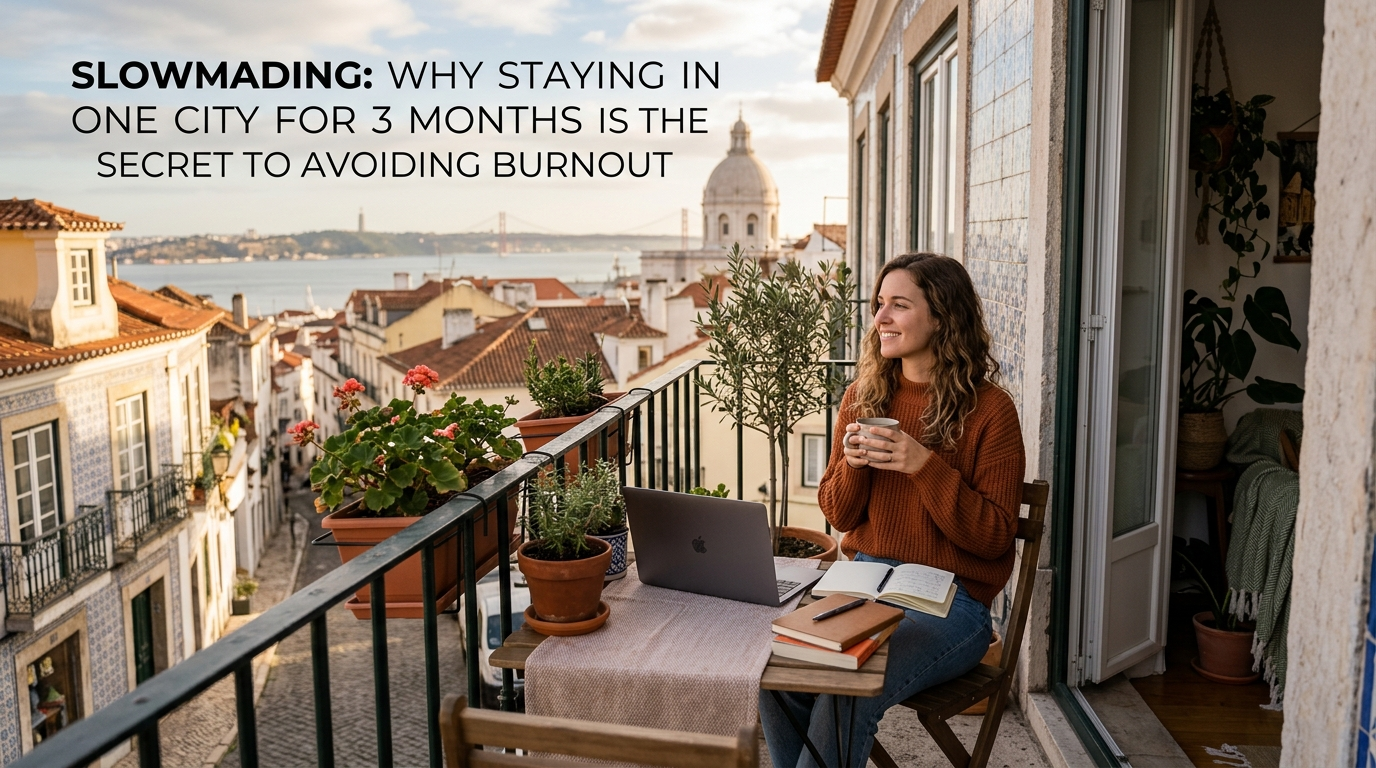
Slowmading: Why Staying in One City for 3 Months Is the Secret to Avoiding Burnout
Introduction
For years, the dream of being a digital nomad looked something like this: spend a week in Bali, two weeks in Bangkok, ten days in Lisbon, then hop on a flight to Mexico City.
On social media, it looked exciting.
In reality, many remote workers discovered something surprising.
Constant travel is exhausting.
The endless cycle of booking flights, finding accommodation, adjusting to new environments, and rebuilding routines can leave even the most adventurous travelers feeling drained. What starts as freedom can slowly become fatigue.
That’s why a growing number of remote workers are embracing slowmading.
Instead of moving every few weeks, slowmads stay in one destination for months at a time. The result is often better productivity, lower stress, stronger relationships, and a healthier work-life balance.
For many digital nomads, slowmading isn’t just a trend. It’s becoming the smarter way to live and work remotely.
What Is Slowmading?
Slowmading is a lifestyle approach where digital nomads spend extended periods in a single location rather than moving constantly.
While traditional nomads may relocate every few weeks, slowmads often stay:
- One month
- Three months
- Six months
- Even a full year
The focus shifts from maximizing destinations to maximizing experience.
Instead of racing through cities, slowmads immerse themselves in local life while maintaining a stable remote work routine.
This approach has become increasingly popular among freelancers, entrepreneurs, remote employees, and location-independent professionals who want sustainability rather than nonstop movement.
Why Traditional Nomad Travel Often Leads to Burnout
Travel Isn’t a Vacation When You’re Working
Many aspiring nomads imagine sightseeing every day.
Then reality arrives.
You still have:
- Client deadlines
- Team meetings
- Projects to complete
- Bills to pay
Trying to combine full-time work with constant travel often creates competing priorities.
You feel guilty when you’re working instead of exploring.
You feel stressed when you’re exploring instead of working.
Neither experience feels fully satisfying.
Decision Fatigue Adds Up
Every move requires dozens of decisions.
Questions like:
- Where should I stay?
- Which neighborhood is best?
- How reliable is the Wi-Fi?
- What’s the visa situation?
- How will I get around?
These choices seem small individually.
Over time, they become mentally exhausting.
Routine Becomes Nearly Impossible
Humans thrive on routines.
Sleep schedules, exercise habits, healthy eating, and focused work sessions become much harder when your environment changes constantly.
Without consistency, burnout becomes more likely.
The Benefits of Slowmading
Better Productivity
One of the biggest advantages of slowmading is improved focus.
When you’re not planning flights or researching your next destination every few weeks, you gain valuable mental space.
Your energy stays directed toward meaningful work instead of logistics.
Many remote professionals report that their most productive months happen when they remain in one location for an extended period.
Lower Stress Levels
Every relocation creates friction.
Even positive experiences involve adjustment.
New language.
New transportation systems.
New grocery stores.
New social environments.
Slowmading reduces this constant adaptation.
Once you become comfortable in a city, daily life becomes easier.
Less stress means more energy for work and personal growth.
Stronger Relationships
One challenge of traditional digital nomad life is loneliness.
It’s difficult to build meaningful friendships when you’re constantly leaving.
Three months in a city creates opportunities to:
- Meet locals
- Join communities
- Attend regular events
- Build professional networks
- Develop genuine friendships
These connections often become one of the most rewarding parts of the experience.
Improved Physical and Mental Health
Constant travel can disrupt:
- Sleep
- Exercise routines
- Nutrition
- Stress management
Slowmading provides enough stability to establish healthy habits.
You can find a gym.
Discover favorite restaurants.
Develop routines that support long-term wellbeing.
Why Three Months Often Works Best
It Matches Many Visa Policies
Many countries offer tourist visas that allow visitors to stay approximately 90 days.
This makes three months a practical timeframe for many remote workers.
You Move Beyond the Tourist Phase
The first few weeks in a city often feel exciting and unfamiliar.
By month two, daily life begins to feel natural.
By month three, you’re often experiencing the destination more like a resident than a visitor.
That’s when many people feel most connected to a place.
You Gain Stability Without Feeling Stuck
Three months strikes a balance.
It’s long enough to create routines and relationships.
It’s short enough to maintain the sense of adventure that attracts many people to the nomadic lifestyle.
A Realistic Example of Slowmading
Imagine two remote workers.
The first changes cities every two weeks.
The second spends three months in one location.
After ninety days, the first person has booked multiple flights, checked into several apartments, researched countless neighborhoods, and repeatedly adjusted to new routines.
The second person has likely:
- Built friendships
- Established productive work habits
- Found favorite cafés
- Joined local communities
- Experienced less travel-related stress
Both traveled.
But one probably feels significantly less exhausted.
How to Choose the Right Slowmading Destination
Not every city works equally well for long-term stays.
Consider factors such as:
Reliable Internet
Remote work depends on connectivity.
Research internet quality before committing.
Cost of Living
A destination that fits your budget allows you to stay longer without financial pressure.
Community
Look for cities with active remote work and digital nomad communities.
Connections make a significant difference.
Lifestyle Fit
Ask yourself:
Do you prefer beaches, mountains, urban environments, or smaller towns?
The right environment can dramatically improve your experience.
Actionable Tips for Successful Slowmading
If you’re considering trying slowmading, start with these strategies:
- Commit to at least one three-month stay.
- Rent accommodation for longer periods when possible.
- Join local coworking spaces.
- Attend community events regularly.
- Establish consistent work hours.
- Create exercise and wellness routines.
- Explore the city gradually rather than rushing to see everything.
Most importantly, give yourself permission to slow down.
Not every day needs to feel like an adventure.
Why Slowmading Is Growing in Popularity
The digital nomad movement is maturing.
Many professionals who once prioritized constant travel are now prioritizing sustainability.
Remote work isn’t a two-week vacation.
It’s a long-term lifestyle.
People are beginning to recognize that success requires balance.
Slowmading offers that balance.
It preserves freedom while reducing many of the stresses associated with perpetual movement.
For countless remote workers, that tradeoff is worth making.
Conclusion
Slowmading challenges the idea that more destinations automatically lead to a better remote work experience.
Sometimes the opposite is true.
By staying in one city for three months, you gain stability, improve productivity, build deeper relationships, and reduce the risk of burnout.
You stop feeling like you’re constantly arriving somewhere.
Instead, you begin living there.
If you’ve been feeling overwhelmed by nonstop travel, consider slowing down for your next destination.
Choose one city.
Stay longer.
Build routines.
Create connections.
You may discover that the secret to enjoying the digital nomad lifestyle isn’t moving more often—it’s moving less.
FAQ
What is slowmading?
Slowmading is a digital nomad lifestyle where individuals stay in one destination for extended periods rather than moving frequently.
Why does slowmading help prevent burnout?
Slowmading reduces travel stress, decision fatigue, routine disruption, and the constant adjustments associated with frequent relocation.
How long should a slowmad stay in one city?
Many slowmads stay between one and six months, with three months often considered an ideal balance between stability and exploration.
Is slowmading better than traditional digital nomad travel?
It depends on personal preferences, but many remote workers find slowmading more sustainable and less stressful over the long term.
Can freelancers and remote employees benefit from slowmading?
Absolutely. Stable routines, improved productivity, and stronger community connections can benefit anyone working remotely.