Managing Digital Residency While Living Abroad
Learn how to manage your digital residency, taxes, and health insurance while living abroad as a digital nomad, freelancer, or remote worker.
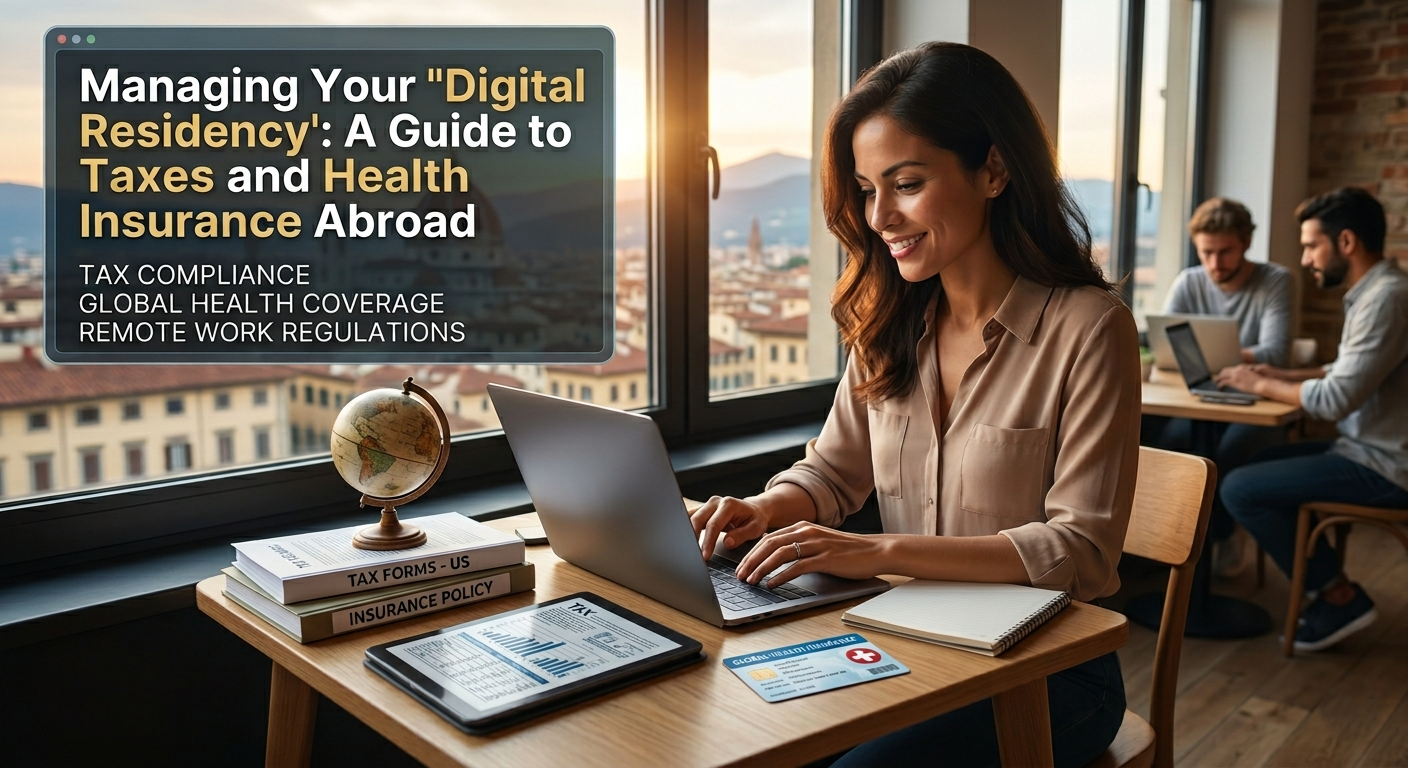
Managing Your “Digital Residency”: A Guide to Taxes and Health Insurance Abroad
Introduction
Working remotely from another country sounds exciting—until tax season arrives.
One day you’re enjoying life in Lisbon, Bali, Medellín, or Chiang Mai. The next, you’re wondering which country you’re supposed to pay taxes in, whether your health insurance covers you abroad, and what happens if you need emergency medical care.
For many remote workers, freelancers, online entrepreneurs, and digital nomads, these questions create more stress than finding reliable Wi-Fi.
The rise of location-independent work has given people unprecedented freedom. Yet freedom comes with responsibility. If you’re earning income while living internationally, understanding your digital residency is essential.
The good news? You don’t need to be a tax expert or insurance specialist to protect yourself. With the right planning, you can avoid costly mistakes and focus on enjoying the benefits of remote work abroad.
Let’s explore what digital residency means and how to manage taxes and health insurance while living internationally.
What Is Digital Residency?
Digital residency refers to the practical and legal framework that supports your life as a remote worker living abroad.
It involves questions such as:
- Where do you pay taxes?
- Where is your business registered?
- Which country considers you a tax resident?
- What health insurance covers you?
- What visa allows you to stay legally?
While the term isn’t always a legal definition, it’s increasingly used among digital nomads and remote professionals to describe the systems that support an international lifestyle.
Think of it as your administrative home base.
Without one, managing life abroad can quickly become complicated.
Why Digital Residency Matters
Freedom Doesn’t Eliminate Legal Obligations
Many first-time digital nomads assume that moving frequently means avoiding tax obligations.
Unfortunately, it’s rarely that simple.
Governments generally determine tax responsibilities based on factors such as:
- Physical presence
- Residency status
- Citizenship
- Income source
- Business location
Ignoring these rules can lead to penalties, audits, and unexpected tax bills.
Healthcare Abroad Can Be Expensive
A routine medical visit may be affordable in one country and costly in another.
Serious emergencies can become financially devastating without adequate health insurance.
Having a digital residency strategy means preparing before problems arise.
Understanding Tax Residency
What Is Tax Residency?
Tax residency determines which country has the right to tax your income.
Many countries use physical presence tests.
A common example is spending more than 183 days in a country during a tax year.
However, every jurisdiction has its own rules.
Some countries also consider:
- Permanent home ownership
- Family location
- Economic interests
- Long-term ties
This is why tax residency is often more complex than simply counting days.
The Digital Nomad Tax Challenge
Imagine a freelance designer who spends:
- Three months in Portugal
- Four months in Thailand
- Three months in Mexico
- Two months in Colombia
Where should taxes be paid?
The answer depends on citizenship, residency laws, local regulations, and international tax agreements.
There is no universal solution.
This is why many experienced nomads work with international tax professionals.
Common Tax Mistakes Remote Workers Make
Assuming No Residency Means No Taxes
Many people believe that constantly moving eliminates tax obligations.
In reality, tax responsibilities often remain somewhere.
Ignoring Reporting Requirements
Even if taxes aren’t owed in a particular country, reporting obligations may still exist.
Mixing Personal and Business Finances
Separating business and personal finances makes tax compliance significantly easier.
Choosing a Tax-Friendly Base
Many remote workers establish a long-term base even while traveling.
Benefits can include:
- Simpler tax administration
- Stable banking relationships
- Easier business registration
- Greater legal clarity
When evaluating a potential base, consider:
Tax Rules
Understand local tax residency requirements before committing to a country.
Banking Access
Reliable banking is critical for freelancers and entrepreneurs.
Business Environment
Some countries offer favorable conditions for remote businesses and independent professionals.
Visa Options
Long-term residency and digital nomad visas can simplify legal compliance.
Health Insurance Abroad: Why It Matters
Your Home Country Coverage May Not Follow You
One of the biggest surprises for new digital nomads is discovering that domestic health coverage often provides limited protection overseas.
Assuming you’re covered can become an expensive mistake.
Always verify what your existing plan actually includes.
Travel Insurance Isn’t the Same as Health Insurance
Many people confuse the two.
Travel insurance often focuses on:
- Trip interruptions
- Lost luggage
- Emergency situations
Health insurance generally provides broader medical coverage for ongoing care and treatment.
If you’re spending months abroad, relying solely on travel insurance may not be enough.
Types of Health Insurance for Remote Workers
International Health Insurance
Designed specifically for people living internationally.
Benefits may include:
- Global coverage
- Hospital treatment
- Specialist visits
- Emergency care
- Preventive services
This is often the preferred option for long-term digital nomads.
Local Health Insurance
Some remote workers purchase insurance within the country where they spend most of their time.
This can be cost-effective but may not provide coverage elsewhere.
Employer-Sponsored Coverage
Remote employees should review whether their company’s health plan extends internationally.
Many assume it does.
Some discover otherwise only after needing care.
How to Build Your Digital Residency Strategy
Keep Accurate Records
Track:
- Travel dates
- Visa status
- Income sources
- Business expenses
- Tax documents
Good records simplify everything.
Consult Professionals Early
A short consultation with a tax or legal professional can prevent expensive mistakes later.
Many nomads wait until problems appear.
It’s usually better to plan ahead.
Review Insurance Annually
Your travel patterns may change.
Your insurance should evolve with them.
Understand Local Requirements
Each country has different rules regarding taxes, healthcare, and residency.
Research before arriving rather than after.
Actionable Tips for Remote Workers Abroad
If you’re building a digital residency strategy, start with these practical steps:
- Identify your current tax residency status.
- Keep detailed travel records.
- Separate business and personal finances.
- Research digital nomad visa options.
- Verify international health coverage.
- Build an emergency medical fund.
- Consult an international tax specialist.
- Review insurance coverage before every major relocation.
Small actions today can prevent major complications later.
Why Digital Residency Is Becoming More Important
Remote work has transformed how people live and earn income.
More professionals are choosing international lifestyles.
Governments are responding with:
- Digital nomad visas
- New tax frameworks
- Remote worker programs
- Updated residency regulations
As this trend continues, understanding digital residency will become an increasingly important skill for location-independent professionals.
Those who plan carefully enjoy greater freedom and fewer surprises.
Conclusion
Living abroad as a remote worker offers incredible opportunities.
You can explore new cultures, reduce living costs, expand your network, and design a lifestyle that fits your goals.
But sustainable freedom requires planning.
Managing your digital residency means understanding how taxes, health insurance, visas, and residency rules fit together.
You don’t need to master every legal detail yourself.
What matters is having a clear strategy and seeking professional guidance when necessary.
If you’re planning an international move, start by reviewing your tax obligations and health insurance coverage today. A few hours of preparation now can save significant stress later.
FAQ
What is digital residency?
Digital residency refers to the tax, legal, business, and healthcare framework that supports remote workers and digital nomads living internationally.
Do digital nomads have to pay taxes?
In most cases, yes. Tax obligations depend on citizenship, tax residency status, local laws, and international agreements.
What health insurance do digital nomads need?
Many digital nomads use international health insurance plans that provide coverage across multiple countries and healthcare systems.
Is travel insurance enough for long-term remote work abroad?
Not always. Travel insurance often focuses on emergencies, while international health insurance typically provides broader medical coverage.
How can I manage taxes while working remotely overseas?
Keep detailed records, understand residency rules, separate business finances, and consider consulting an international tax professional for guidance.