LinkedIn Networking Without Cold DMs: What Works
You know the message. It arrives in your LinkedIn inbox within 48 hours of connecting with someone new. “Hey [First Name], I noticed you’re in [Industry] and I think you’d be a great fit for what we do at [Company]. Would love to jump on a quick 15-minute call!”
You archive it without replying. Everyone does.
Here’s the irony: the person who sent that message probably does have something useful to offer. They’re just leading with the wrong foot pitching before there’s any trust, any rapport, any reason for you to care. It feels transactional because it is.
LinkedIn networking doesn’t have to work that way. And the professionals quietly building their best opportunities on the platform right now? They’ve figured out a completely different approach.
Why Cold LinkedIn Outreach Fails (And Keeps Failing)
The fundamental problem with cold demos and cold pitches on LinkedIn is that they treat the platform like a direct sales channel rather than what it actually is: a professional community.
Think about how trust gets built in real life. You don’t walk up to a stranger at an event and immediately pitch your services. You talk. You find common ground. You show genuine interest. Only after there’s some kind of relationship does a business conversation feel natural.
LinkedIn networking works the same way it’s just that most people skip every step before the pitch.
There’s also a visibility problem. When someone gets a cold message from a person they’ve never interacted with, there’s no social proof, no context, no reason to respond. You’re a stranger in their inbox asking for their time. The answer is almost always silence.
The good news? Building real visibility on LinkedIn isn’t complicated. It just takes consistency and a willingness to show up genuinely.
The Strategy That Actually Works: Warm Yourself Up First
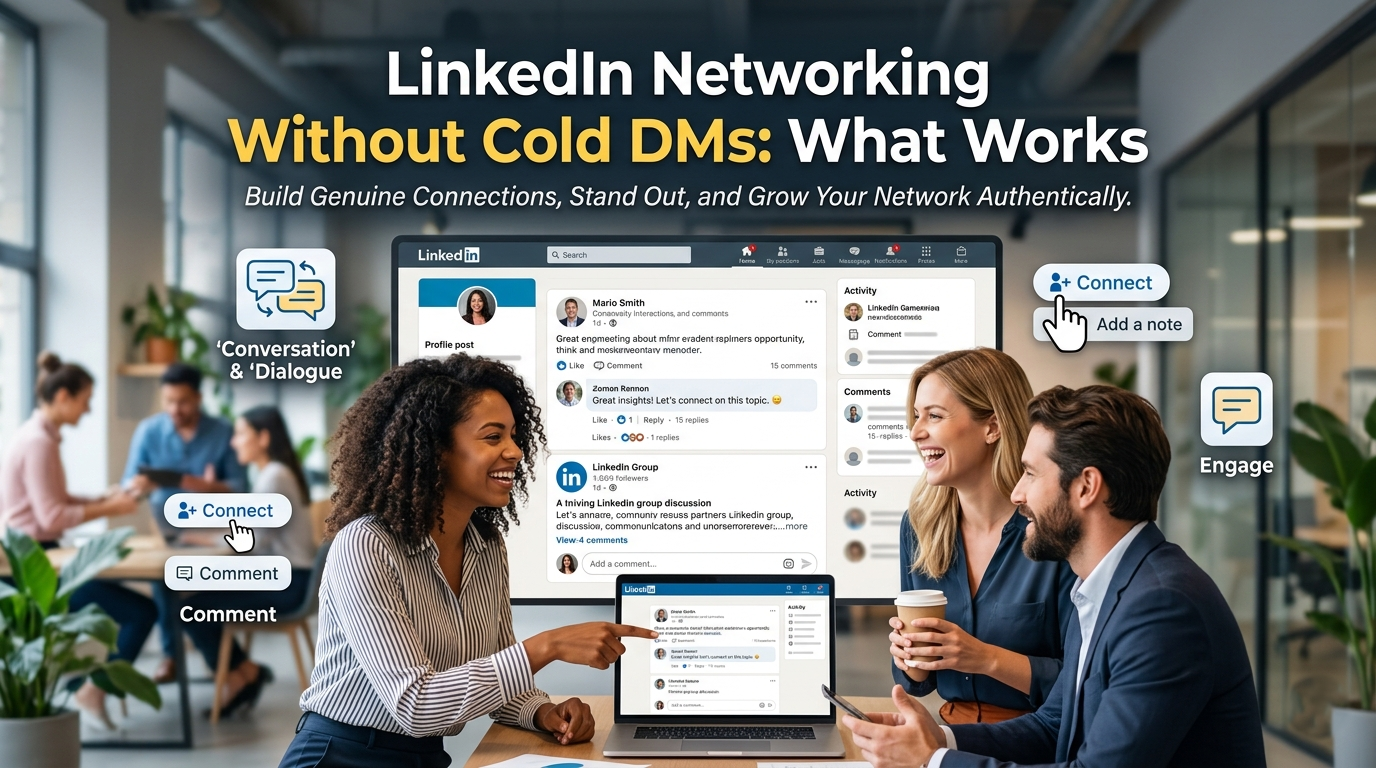
Show Up in Comments Before You Slide Into DMs
This is the single most underused tactic in LinkedIn networking, and it works almost embarrassingly well.
Find five to ten people in your target space potential clients, collaborators, employers, or peers and spend two weeks genuinely engaging with their content. Not “Great post!” or fire emojis. Actual responses that add something: a counterpoint, a relevant example, a follow-up question, a personal experience that connects to what they wrote.
Here’s what happens: they see your name repeatedly. Their audience sees your name. When you eventually send a connection request or a message, you’re not a stranger anymore. You’re the person who left that thoughtful comment last Tuesday.
For freelancers and remote workers who don’t have the advantage of in-person industry events, this is how you replicate the “familiarity effect” that usually takes months of conference attendance to build in weeks, from your desk.
Create Content That Does the Outreach For You
The most efficient form of LinkedIn networking is the kind where people come to you.
When you post consistently about your area of expertise sharing opinions, lessons learned, honest takes on industry trends, or behind-the-scenes glimpses of how you work you become findable by the exact people you’d want to connect with.
A UX designer posting about client red flags attracts clients who appreciate that directness. A remote project manager writing about asynchronous communication frameworks attracts distributed teams looking for exactly that. The content does the qualifying work before any message is ever sent.
What performs well on LinkedIn right now:
- First-person stories with a clear lesson or takeaway
- Contrarian takes on widely accepted practices in your field
- Short, specific advice posts (not generic “5 tips for success” content)
- Honest reflections on failures, pivots, or lessons that didn’t come easily
- Process breakdowns that show how you think, not just what you do
You don’t need to post every day. Two or three times a week, consistently, beats daily posting that burns you out after a month.
The Art of the Warm Connection Request
When you do reach out to connect, the message matters more than most people realize.
A connection request with no note gets accepted or ignored randomly there’s no signal either way. A note that says “I’d love to connect!” adds nothing. But a short, specific message that references something real? That’s what gets noticed.
Something like: “Your post on client onboarding last week described exactly what I’ve been thinking about — added it to my swipe file. Would love to connect.”
That’s it. No pitch. No ask. No “quick call.” Just a genuine reason you’re reaching out, grounded in something specific they actually said or did.
The goal at this stage isn’t to sell anything. It’s to open a door. Let the relationship breathe before you ask anything of it.
Following Up Without Becoming a Nuisance
Here’s where a lot of otherwise solid LinkedIn networking falls apart: the follow-up.
If someone accepts your connection request and you immediately fire off a pitch, you’ve wasted everything you built. The patience pays off after the connection is made, not just before it.
A better rhythm:
- Week 1: Connect, send a genuine note if appropriate, no pitch.
- Week 2–3: Continue engaging with their content publicly. Share or comment on something relevant.
- Week 4+: If there’s genuine alignment, reach out with something that adds value first a resource, an observation about their work, a question that opens a real conversation.
Only after this foundation exists does a conversation about working together feel natural rather than calculated. And when it does happen, it rarely feels like a cold pitch because it isn’t one anymore.
Practical LinkedIn Networking Tips to Start Using This Week
You don’t need to overhaul everything at once. Start here:
- Audit your profile first. Before you do anything else, make sure your headline and about section are written for the person you want to attract, not just a summary of your job history. Your profile is your landing page.
- Pick five target accounts. Identify five people you genuinely want in your network and commit to engaging meaningfully with their content for 30 days before sending any outreach.
- Write one post this week. Not a generic career update a specific opinion, lesson, or story from your actual work. See what resonates.
- Clear your “pending invitations.” If you’ve been sending connection requests with no notes and no follow-through, clean up your outreach strategy before scaling anything.
- Give before you ask. Every single time. Refer someone, share their work, leave a recommendation unprompted. The reciprocity that follows isn’t guaranteed, but it’s real.
Why This Works Especially Well for Remote Professionals
For remote workers, freelancers, and digital nomads, LinkedIn networking carries extra weight.
Without a physical office or local professional community, your online presence is your network. There’s no watercooler, no industry happy hour, no conference hallway conversation. The relationships you build on LinkedIn are the ones that lead to referrals, collaborations, job opportunities, and client work.
The people who treat it like a billboard post occasionally, pitch constantly, never engage get billboard results: lots of impressions, not many real connections. The ones who show up consistently and genuinely build something that compounds. Connections lead to introductions. Comments lead to conversations. Conversations lead to opportunities that never show up in a job board.
It’s slower than blasting cold messages. It’s also the only approach that actually works.
LinkedIn networking without cold pitches isn’t a passive strategy it’s an active one. It requires showing up regularly, engaging honestly, and building enough presence that when you do reach out, you’re already a familiar face.
The professionals getting the most from LinkedIn right now aren’t the most aggressive ones. They’re the most consistent, the most genuinely curious, and the most willing to give before they ask.
This week, pick one thing from this article and actually do it. Engage with five posts in your target space. Write one honest piece of content. Send one connection request with a specific, thoughtful note. Start small, stay consistent, and watch what compounds.
Your next client, collaborator, or career opportunity is probably already on LinkedIn. The question is whether they know you exist yet.
Frequently Asked Questions
How do I network on LinkedIn without being annoying or salesy? Lead with genuine interest rather than an agenda. Engage with people’s content, share your own expertise publicly, and when you do reach out, reference something specific and real. The biggest shift is moving from “what can I get from this person” to “what can I offer or contribute” the entire energy of your outreach changes.
What should I say in a LinkedIn connection request? Keep it short and specific. Reference something they posted, wrote, or said or briefly explain the genuine reason you want to connect. Avoid templated language like “I’d love to add you to my network.” A one or two sentence note that shows you actually know who they are will get accepted far more often than a generic request.
How often should I post on LinkedIn to build my network? Consistency matters more than frequency. Two to three posts per week is sustainable for most people and more than enough to build visibility over time. Daily posting can work, but only if the quality stays high. Burning out and going silent for months is worse than a slower, steadier pace.
Can I build a strong LinkedIn network without paying for Premium? Absolutely. Most of the highest-leverage LinkedIn networking tactics — commenting, posting content, sending connection requests with notes, engaging authentically are free. Premium’s main advantage is InMail for messaging people you’re not connected to, but if you’re doing the warm-up work described above, you often won’t need it.
How long does it take to see results from LinkedIn networking? Expect a 60 to 90 day runway before things start to feel like they’re moving. That’s roughly how long consistent engagement takes to build meaningful visibility. The timeline feels slow at first, but the connections made through this approach tend to be far more durable and valuable than anything that comes from mass cold outreach.